
(This article may include affiliate links and if any sales are made I may receive a small commission)
A ketogenic diet – or keto diet – is a low-carb, high-fat eating routine. It tends to be successful for weight reduction and certain medical issue, something that has been exhibited in numerous examinations.
A keto diet is particularly helpful for losing overabundance muscle to fat ratio without hunger, and for further developing sort 2 diabetes or metabolic disorder.
In this current amateur’s aide, you’ll figure out how to eat a keto diet. Our visual aides, plans, dinner plans, and straightforward 2-week Get Started program are all you require to prevail on keto.
1. What is a keto diet?
A keto diet is one that limits carbs and has many potential health benefits.
When you eat far fewer carbs, your body begins to burn fat for fuel. This can put your body into a metabolic state called ketosis. In this state, your liver turns fat into small energy molecules called ketones, which your brain and other organs can use for energy.Eating a keto diet lowers insulin levels, often dramatically, which can help you access your body fat stores for energy. Many studies show significant weight loss on keto, without having to count calories. Keto diets may have other positive health effects, such as reducing blood sugar levels.
Learn more about ketosis
Summary
The keto diet is a low-carb, high-fat diet. It can help the body burn more fat, reduce hunger, and reduce blood sugar levels.
2. What to eat on a keto diet?
Here are typical foods to enjoy on a ketogenic diet. The numbers are net carbs per 100 grams (3.5 ounces) of food.
To remain in ketosis, foods with lower counts are generally better:

What’s the main thing to do to arrive at ketosis? Try not to eat such a large number of carbs. You’ll probably have to remain under 50 grams of net carbs (absolute carbs short fiber) each day, preferably under 20 grams.
The less carbs you eat, the more successful the eating regimen seems, by all accounts, to be for arriving at ketosis, getting thinner, or further developing sort 2 diabetes.
Checking carbs can be useful from the get go. Be that as it may, on the off chance that you adhere to our suggested food varieties and plans you can remain keto even without checking.
Planning keto
With the right strategy, creating keto meals is easy.
One way is to start by picking a protein source, such as meat, fish, seafood, eggs, or tofu. Then, to complete your meal, choose two low-carb vegetables and add a healthy source of fat.
What to drink

What can you drink on a ketogenic diet? Water is the perfect drink, and coffee or tea are fine too. Ideally, use no sweeteners, especially sugar.
A splash of milk or cream in your coffee or tea is OK, but beware that the carbs can add up if you drink multiple cups in a day (and definitely avoid caffe lattes!). The occasional glass of wine is fine, too.
Try to avoid
Here’s what you should avoid on a keto diet – foods containing a lot of carbs, both the sugary and the starchy kind. This includes foods like bread, pasta, rice and potatoes. These foods are very high in carbs.
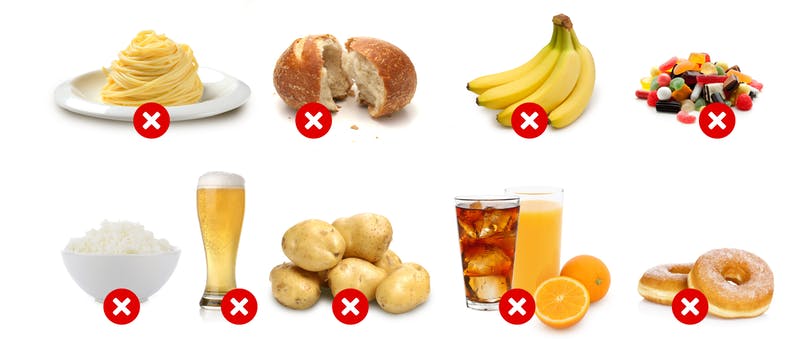
The numbers are grams of net carbs per 100 grams (3.5 ounces), unless otherwise noted.
Also, avoid or limit highly processed foods and instead fill your diet with our recommended keto-friendly food options.
Summary
Base your keto meals on meat, poultry, fish, eggs and other protein-rich foods. Include lots of leafy greens, non-starchy veggies, and salads. Use fats like olive oil for flavor and to fill in calories, if needed. Avoid sugary and starchy foods. Drink water, tea, or coffee.
Keto macros: Carbs, protein, & fat
When following a keto diet, the idea is to eat very few carbs, a moderate amount of protein, and just as much fat as you need to feel satisfied, rather than stuffed.
Carbohydrates
Limit carbs to 20 or fewer grams of net carbs per day, or 5 to 10% of calories. Although it’s possible that you may not need to be this strict, eating fewer than 20 grams of net carbs every day virtually guarantees that you’ll be in nutritional ketosis. Learn more >
Protein
Eat enough protein to meet your needs. Most people need at least 70 grams per day, or 20 to 35% of calories from protein. Learn more >
Fat
Include enough fat to add flavor. There’s no reason to add lots of fat unless you need extra calories. Plus, many whole foods like eggs and meat contain plenty of fat. On a keto diet, about 60 to 75% of your calories come from fat.
(This article may include affiliate links and if any sales are made I may receive a small commission)

 The Keto Diet